If you’ve ever tried to crochet a sunflower and ended up with something that looks more like a five-legged starfish, you’re not alone. Realistic sunflowers are tricky, but totally doable with a plan, the right stitches, and a playful attitude. Grab your hook, your favorite yarn, and a big jar of patience—we’re about to make sunny blooms that could fool a bee.
From Thread to Sunflower: The Big Picture
Sunflowers aren’t shy plants, and neither should your crochet be. Realism comes from shape, color, texture, and a little botanical swagger. We’ll break this into bite-sized steps so you don’t drown in yarn and corn syrup vibes of “how it should look.”
– Start with the core: the disk is everything. A realistic center anchors the whole flower.
– Petals aren’t perfect circles. They curve, overlap, and vary in length.
– Color matters: a tuft of browns and yellows layered just right sells the look.
– Leaves and stem complete the illusion. Don’t skimp here—they make or break the realism.
– Finish with texture: fuzz, sheen, and subtle shading mimic nature.
Choosing the Right Yarn and Hook for Realism
Yarn choice isn’t cosmetic; it steers texture, drape, and how the petals fall. Think of this as your paint palette for a 3D sculpture, not a flat drawing.
– Fiber matters: cotton for crisp stitches or acrylic for bounce and color range. If you want a vintage vibe, go with a rustic wool blend.
– Weight wisdom: sport to DK for petals, worsted for sturdier centers and stems. If you want a bigger bloom, chunky yarn can work, but you’ll lose delicate detail.
– Hook size: match the hook to your yarn label, but don’t be afraid to go a fraction up or down to get the right tension.
– Extras: a little felt or suede for the center, a touch of fringe for a fuzzy center, or metallic thread for a glint of realism.
The Core: Crafting a Realistic Sunflower Center
The center is where your sunflower earns its street cred. It’s not just brown; it’s a gradient of texture and shade.
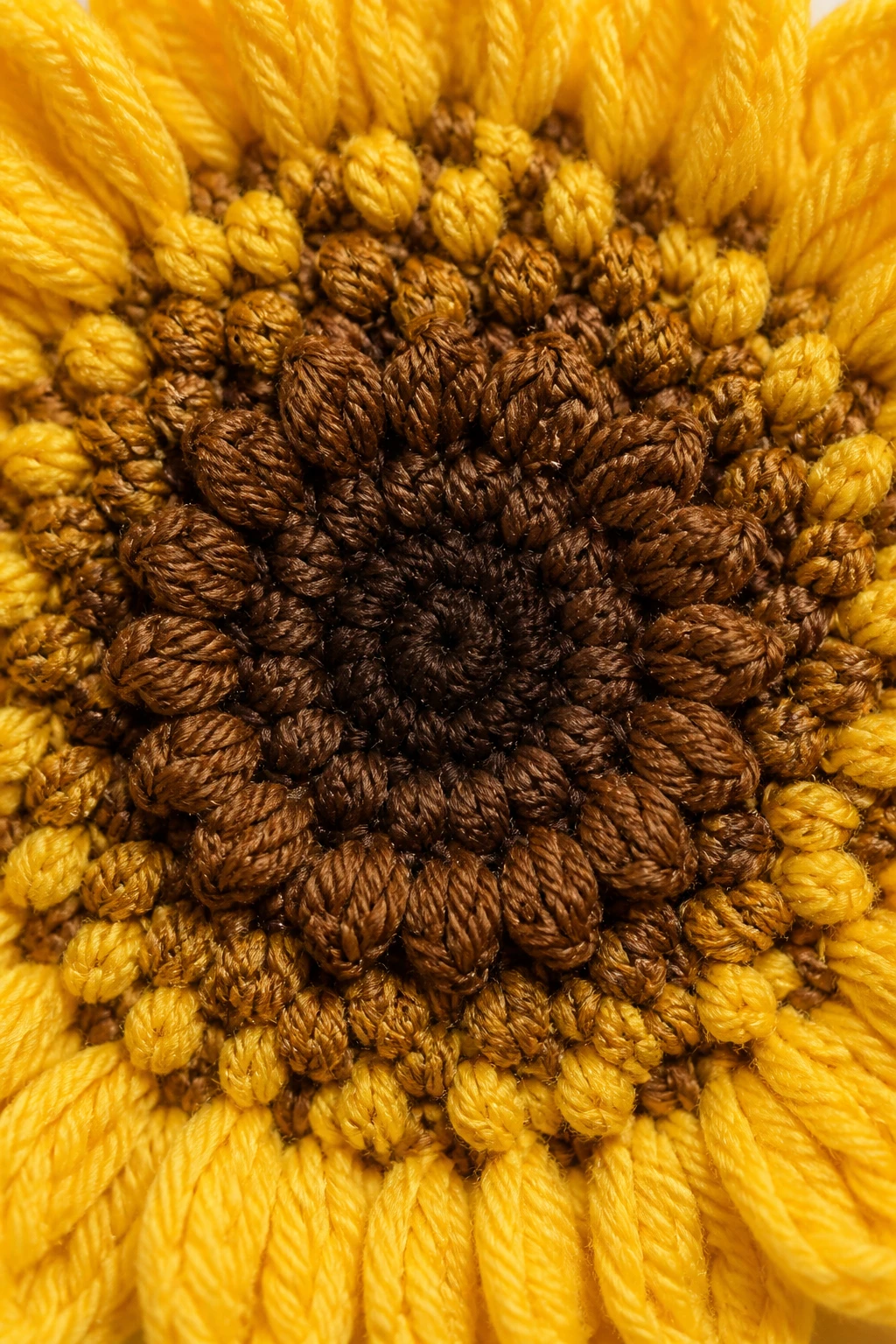
– Start round, build texture: begin with a tight magic ring or a small, tight circle. Then layer with stitches that create a raised, grainy look.
– Use a mix of stitches: a single crochet base with popcorn stitches or bobbles can mimic seed texture.
– Color depth: mix dark brown with hints of black and ochre. Don’t go flat—tiny color shifts read as realism.
– Radius matters: a slightly domed center reads as natural. Flattening it completely will make it look toy-like.
– Surface variation: hint of fuzzy texture by lightly zigzagging a downy thread or specialty yarn across the surface.
Subsection: How to Build the Seed Pattern
– Plan your rounds: alternate between tight rounds and slightly looser rounds to create a sun-brown look.
– Add subtle spirals: deploy a few spiral stitches to mimic seeds arranged in natural spirals.
– Don’t overdo it: scale texture to the whole piece. You want detail, not a grainy potato.
Petal Power: Crocheting Realistic Sunflower Petals
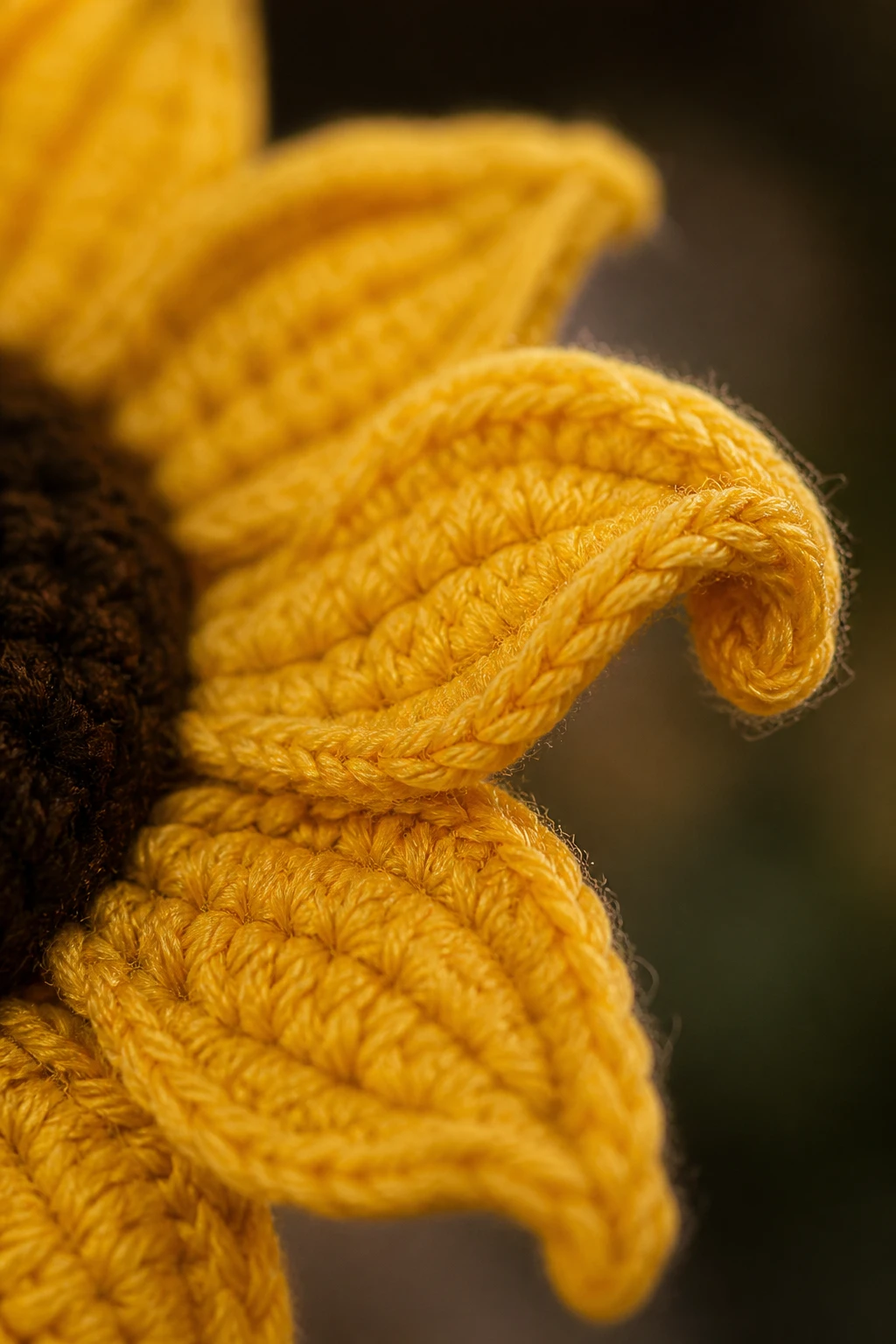
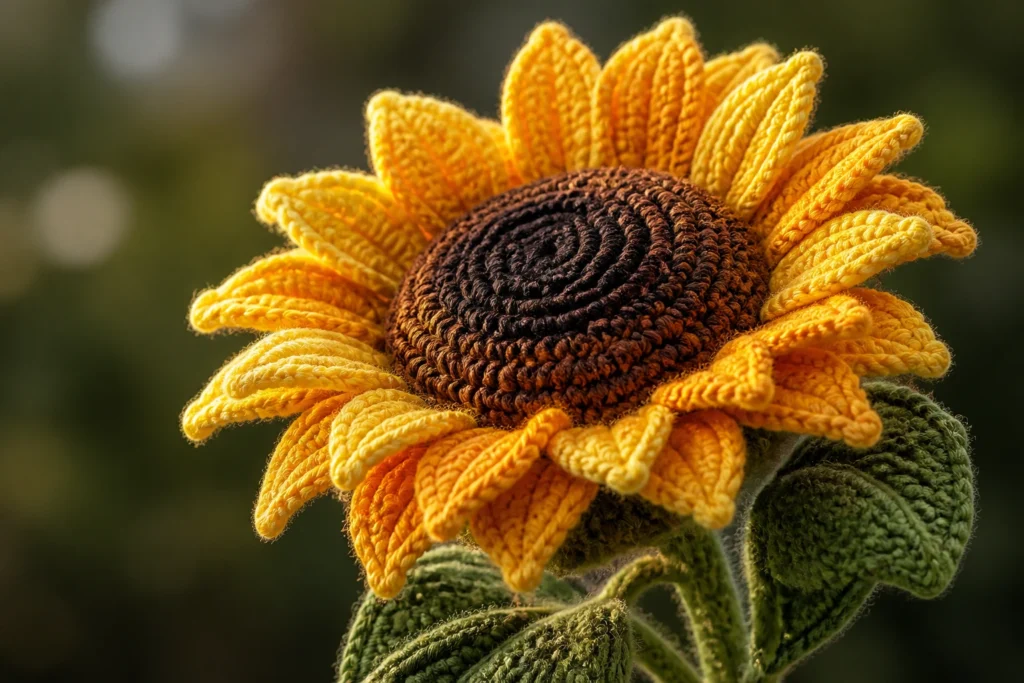
Petals carry the drama. Realistic sunflowers have pointy, slightly curved petals with slight color variation along the length. Here’s how to nail that.
– Start with the shape: elongated teardrops, not tepid circles. A gentle curve sells the look.
– Attach with staggered rows: overlap petals like a real flower does. Don’t line them up perfectly.
– Color shading: tip of the petals should be lighter or darker depending on light direction; use subtle changes in yarn color or gentle thread highlights.
– Petal edges: a tiny slip stitch along the outer edge can smooth the curve and keep them from looking stiff.
– Curl and bend: a slight twist of the petals as you crochet helps them catch light like real sunflowers.
Subsection: Petal Variations for a Natural Look
– Some petals longer than others create a dynamic silhouette.
– Alternate tight and loose stitches to add texture.
– Add small stitches near the base to simulate natural ruffling at the petal base.
Leaves and Stem: Grounding Your Sunflower
Leaves and stems anchor the bloom and sell the overall realism. A stiff stem with broad leaves makes the blossom look ready to lean toward the sun.
– Stem: use a firm, sturdy stitch with a bit of shaping—think a gradual taper as you work up.
– Leaves: shape with an elongated oval and a slight curve. Veins read as texture when you add a few raised stitches or a strand of yarn laid in.
– Color tricks: a couple of greens along the stem and leaf edges create depth. Don’t flood with green; keep it nuanced.
– Positioning: the bend of the stem and the angle of the leaves matter. Real sunflowers track the sun; you can echo that by angling leaves away from the center.
Subsection: Making the Leaves Look Realistic
– Vein lines: use a contrasting yarn to weave in simple vein lines.
– Surface texture: a row of front post stitches along the leaf edge makes it look sun-kissed.
– Shape variety: not all leaves should be identical. A few asymmetrical shapes read as organic.
Color Methods: Dyes, Dyes, and Subtle Shading
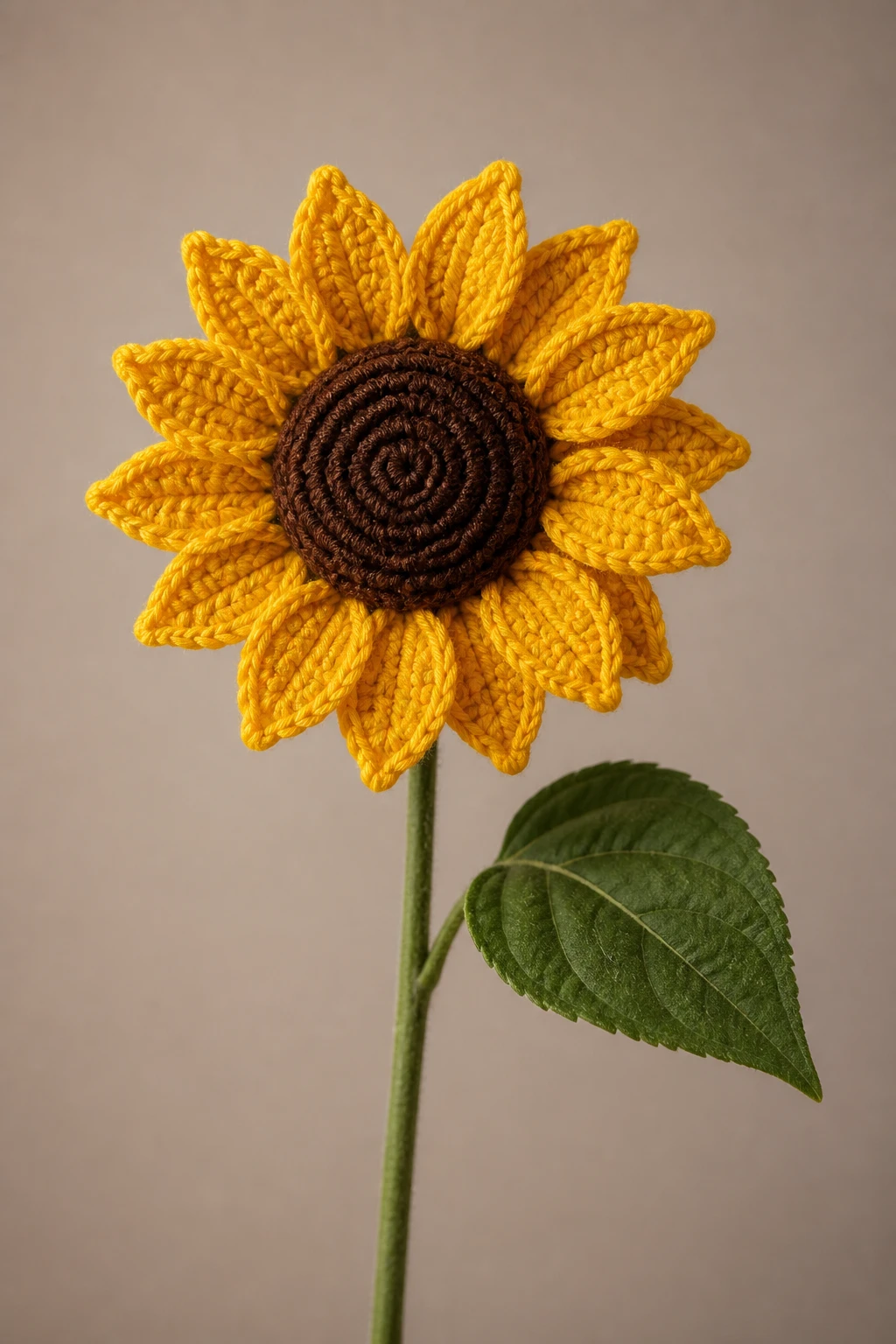
Color is the storyteller here. A sunflower can’t be flat yellow; it needs depth, shadow, and a bit of chaos.
– Layering: work in stages—center first, then petals, then the darkest inner edges of petals.
– Shade strategy: choose three to four shades of yellow with a brown or olive accent for stems and leaves.
– Threaded highlights: tiny touches of light yarn woven into the tops of petals catch light the way real sunflower petals do.
– Ombré effect: a gentle transition from pale to vibrant can be achieved with careful color changes and minimal blending.
Finishing Touches: Texture, Shine, and Realism Details
The finish can make or break the illusion. A sunlit bloom needs little details to feel alive.
– Texture sprays: a light spray of fiber wash or a quick mist of water and smoothing helps petals hold their curve.
– Gloss and bloom: a small dab of fabric glue with a micro-gloss can fake dew on the petals for morning freshness.
– Hairy center option: a tiny piece of fuzzy yarn or extra-thin fiber can simulate the fuzzy disk of a real center.
– Mounting and display: a simple twig in the stem, or a ceramic pot, can elevate your finished piece from toy to art.
Project Ideas: How to Use Your Realistic Sunflower Crochet
– Wall garland: chain a few sunflowers of varying sizes for a bright, indie-chic banner.
– Centerpiece: mount a single large bloom on a lightweight stand for a quirky centerpiece.
– Dreamy bouquet: combine several sunflowers with different leaf shapes and heights for a bold arrangement.
– Seasonal decor: a cluster of mini sunflowers on a hoop makes a playful seasonal wall hanging.
– Gift-worthy: crocheted sunflowers with a handwritten note are unexpectedly charming.
Troubleshooting: Common Hurdles and Simple Fixes
Crochet realism isn’t a smooth ride all the time. Here are quick fixes for the hiccups.
– Petals too stiff: loosen the tension a bit or switch to a slightly larger hook for a softer drape.
– Center looks flat: add a few extra texture rounds with popcorn stitches to build height.
– Colors bleed into petals: knot off ends well and weave the color changes gently to avoid thread snarls.
– Stem wobbles: reinforce with a spiral core, or wrap with a thin floral wire for extra stability (careful not to poke through the stitches).
FAQ
How many petals should a realistic sunflower have?
A real sunflower’s petals range a lot, but for a crochet version, aim for 20-40 petals depending on bloom size. Too few can read as cartoonish, too many can crowd the center. Start with 24 for a medium bloom and adjust from there.
What yarn colors work best for the center?
Mix a few browns and blacks. A classic approach is a dark brown base with specks of black and a touch of ochre or tan to mimic the seed variations. Don’t forget a tiny hint of gray or olive for shading.
Can I make a sunflower with a felt center instead of crocheting it?
Absolutely. Some crafters prefer a felt center for ease and texture. You can crochet the petals and leaves while attaching a felt disk to the inside for a crisp, tactile center.
How do I make the sunflower stand up on a display?
Use a sturdy stem, possibly reinforced with a wire core, and attach the stem to a weighted base or a painted wooden stand. If you’re displaying in a vase, a bit of floral foam or clay at the base helps keep the bloom upright.
Which stitches give the most realistic texture?
Front post stitches for veining on leaves, surface slip stitches for a subtle fur-like center, and a mix of half-double and single crochet plus occasional popcorn stitches on the center all contribute to a more lifelike look.
Any tips for beginners aiming for realism?
Start small. Crochet a single petal and center first, then gradually build up. Don’t chase perfection; aim for consistency in tension and color transitions. FYI, the first version will likely look more cute than realistic—that’s part of the process.
Conclusion
Sunflowers are stubbornly cheerful, and with the right approach, your crochet version can radiate that same warmth. Remember: realism isn’t about duplicating nature to the millimeter; it’s about capturing life, texture, and the way light plays on petals. Keep your colors layered, your textures varied, and your petals gently overlapping. If you’re ever tempted to throw in the towel, just think of how a real sunflower follows the sun—and maybe smile at the ridiculous effort that becomes a gorgeous handmade bloom.
If you want, we can tailor the project to a specific size, color palette, or display method. IMO, a large centerpiece on a pedestal with a few smaller blooms around it makes a striking statement. FYI, the more you practice, the quicker you’ll spot the tiny details that separate “cute” from “wow, that looks real.” Now go crochet the sun into your world.