The moment you grip that crochet hook just right, your world changes. No more sore wrists, no more dropped stitches in the first row. Let’s get you set up so crochet feels like second nature, not a puzzle you forgot to bring the manual for.
Why grip matters more than you think
Ever try to crochet with a clamped fist? It’s like trying to drive a car with your knees. A good grip lets you move smoothly, control tension, and keep fatigue away. FYI, the hook is your sword and your Vivian-approved technique is your shield. Get comfy now, thank yourself later.
Two popular grips, two different vibes
There isn’t one perfect grip for everyone. Some folks vibe with a pencil grip; others prefer a knife grip. Both work, as long as you’re not squeezing like you’re trying to crush a tiny watermelon.
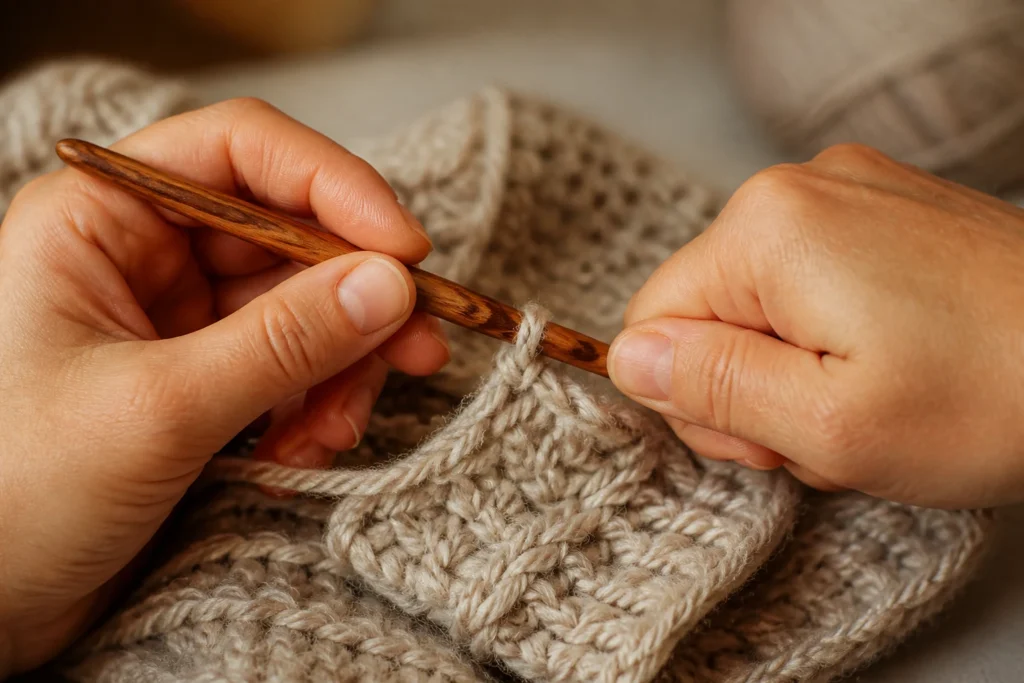
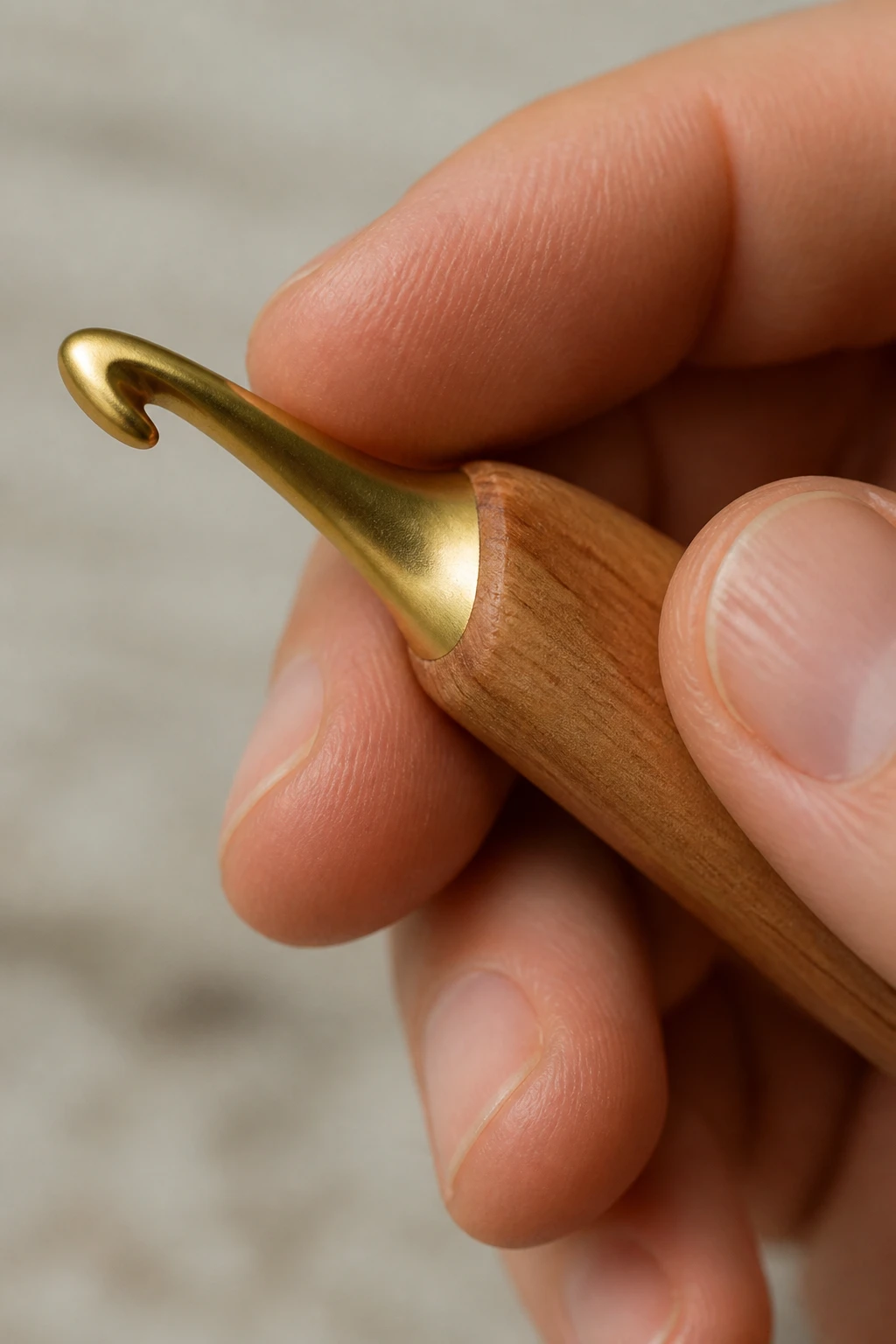
Pencil grip (like writing with a pencil)
– Hold the hook near the inner curve, about a finger’s width from the tip.
– Let your thumb and index finger cradle the shaft, with the rest of your hand relaxed.
– Move the hook with your wrist and forearm, not just your fingers.
– This grip gives you precision for tight stitches and delicate detail.
Knife grip (like holding a knife)
– Grasp the hook as if you’re holding a knife, with the index finger resting along the spine.
– This grip often feels more relaxed for long sessions and bigger projects.
– Your other fingers act as a gentle assist, not a vice.
– Great for mass crochet work or when you’re chaining hundreds of stitches.
Finding your neutral position
A neutral position means your hand, wrist, and shoulder stay comfortable for the whole session. No compromise on form, no drama.
- Keep your wrist straight-ish. Don’t bend it into a sharp angle or you’ll hate your life after 20 minutes.
- Relax your shoulders. If they creep up toward your ears, loosen up and shake it out.
- Hold the yarn with a light touch. If you’re strangling it, you’ll miss stitches and cramp. yes, I’ve been there.
- Choose a comfortable chair height so your forearm can move fluidly without contorting.
How to hold the yarn for smooth stitches
Yarn tension runs the show. Too tight and you’ll singe your fingers; too loose and you’ll lose stitch control.
- Wrap the yarn over your pinky and let it run along the back of your hand. This gives you a steady feed without strangling the yarn.
- Keep a gentle grip so the yarn doesn’t slip, but don’t yank it—stitches like to play hide-and-seek when you’re tense.
- Practice tension drills: stitch a few rows, check your gauge, adjust as needed.
Step-by-step: getting the hang of the basic grip
Let’s walk through a simple routine you can try tonight. It’s not a ritual; it’s a quick warm-up for crochet success.
- Choose your grip (pencil or knife) and stick with it for the session.
- Position your hook so the hook’s edge rests comfortably against your hand.
- Let your wrist do the heavy lifting, not your fingers. A loose grip means smooth moves.
- Hold the yarn like you’re guiding a silk ribbon, not throttling a snake.
- Make a chain and stop. Check your tension: is your chain even? If not, loosen or tighten slightly.
Common grip mistakes and how to fix them
– Gripping too tight: your stitches will be stiff and your hand will scream. Loosen up, friend.
– Wrists bending awkwardly: straighten that line and rotate your arm instead.
– Finger fatigue: take breaks, switch grips, or switch to lighter hooks.
– Overthinking: trust your muscle memory a little.
Choosing the right hook and yarn for practice
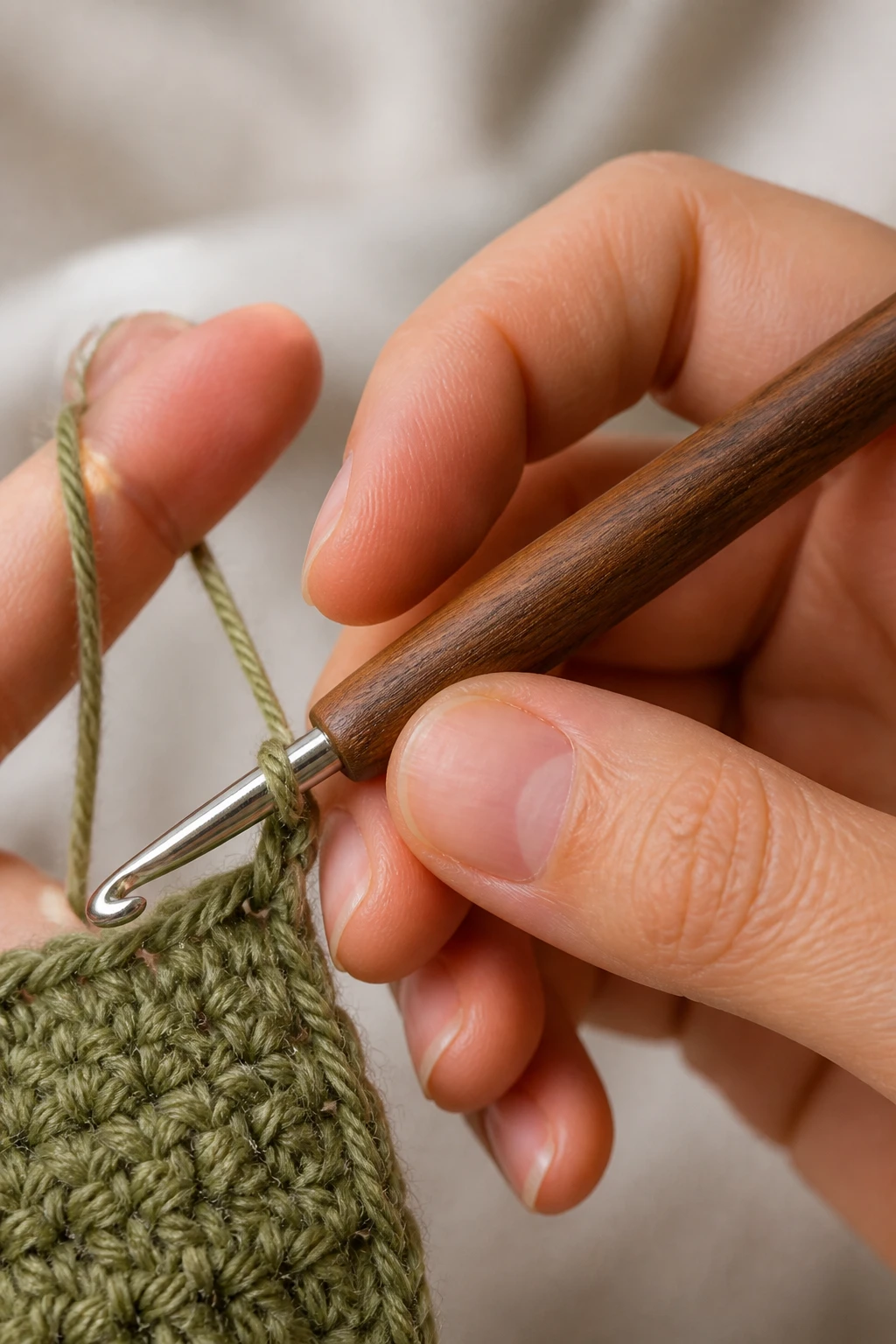
Your tools can be your best friends or your biggest foes. Start with practice-friendly combos.
- Hooks: medium-sized (like a G/6 or H/8) are forgiving for beginners. Move up or down later based on your yarn and project.
- Yarn: bulky yarn is easier to see and control; fine yarn teaches you precision. Pick a color with good contrast to your hook to spot stitches faster.
- Yarn weight matters: heavier stitches are kinder on your hands; delicate lace requires a lighter touch.
Ergonomics: saving your hands for the long haul
Crochet should feel satisfying, not a workout. A few small tweaks can save you from repetitive strain.
- Take micro-breaks every 15–20 minutes. Stretch, shake out your hands, breathe. Yes, it helps.
- Alternate grips if one starts to feel off. Your hands aren’t built to endure a single position for hours.
- Stand up and move around now and then. A little movement goes a long way.
Practical tips for different projects
Projects vary, so adapt your grip and posture accordingly. Here are quick pointers for common things.
Scarves and blankets
– Use a relaxed grip to cover long rows without fatigue.
– Let your non-dominant hand guide the fabric, not resist it.
– If your stitches start to drift, re-check your anchor stitch and tension.
Amigurumi and tight stitches
– A steadier grip helps you control small stitches with accuracy.
– You might prefer a pencil grip to keep precision, but don’t force it if it hurts.
– Take breaks to prevent hand cramps when working on tiny details.
Hats and garments
– For circular rounds, keep your tension consistent around the circumference.
– Periodically flatten your work to check for uneven rows and adjust as needed.
Keeping motivation high: practice rituals that work
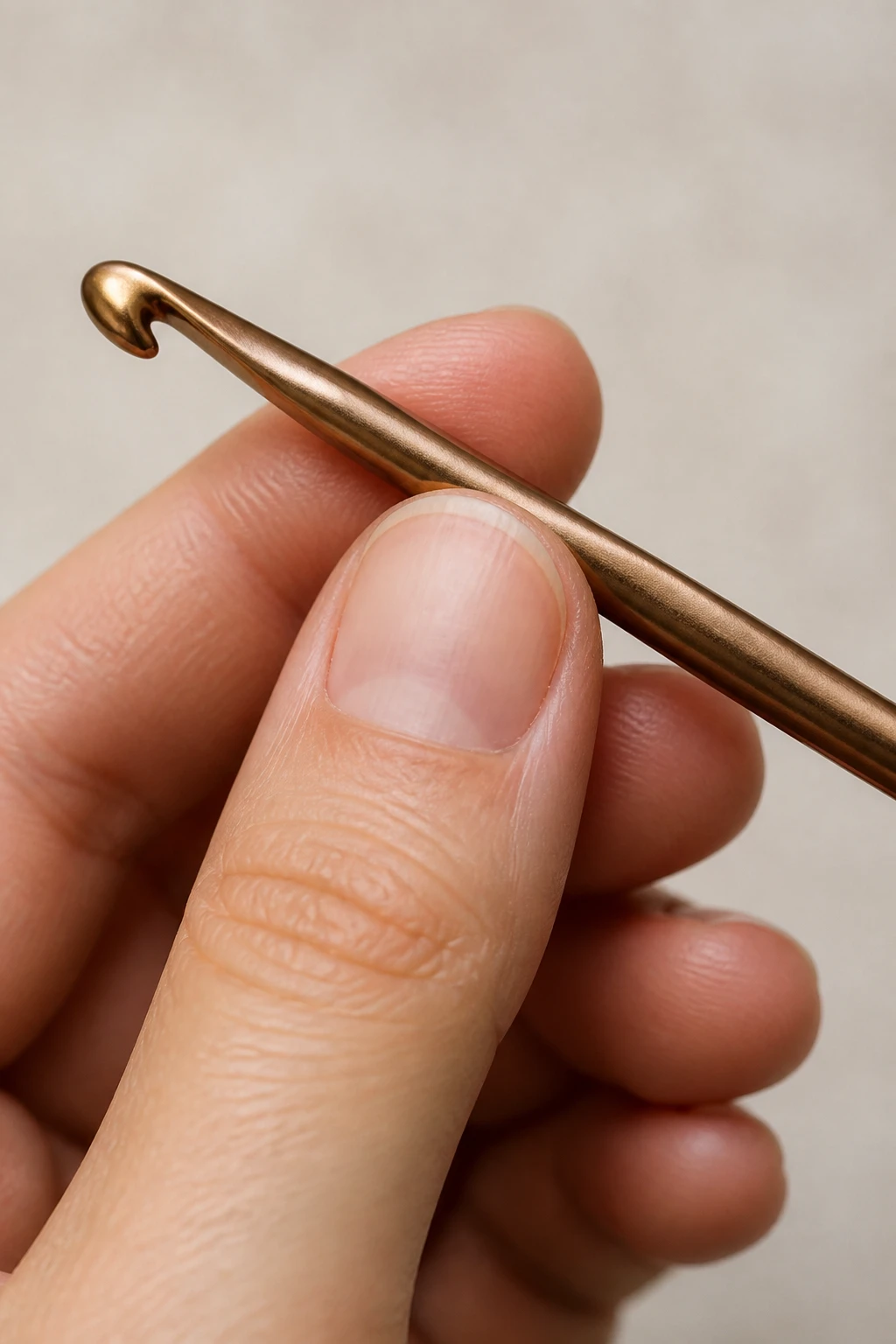
Consistency beats intensity. Try these tiny rituals to keep momentum.
- Set a 15-minute daily goal. Tiny wins compound quickly.
- Keep a project log: note what grip you used and how it felt. That’s data you can use later.
- Celebrate small milestones: a neat edge, a perfect stitch, a color you love.
How to troubleshoot common grip problems
Have a snag? Let’s fix it without drama.
- Stitches leaning or skewed: re-check your tension and rotate your wrist as you work.
- Hand fatigue after 10 minutes: switch grips, take a micro-break, or switch to a larger hook.
- Hook slipping from fingers: adjust your grip so the hook sits securely in your hand.
Deeper dive: tension and stitch consistency
– Consistent tension prevents wonky edges. If your loops vary wildly, your grip might be too tight or too loose.
– When you adjust tension, do it gradually: small tweaks in your grip or yarn tension make big differences over rows.
– Practice with a swatch: chain a long length, then single crochet back, watching how your tension changes as you get tired.
FAQ
Do I have to pick a grip forever?
Yes and no. Start with a grip that feels comfortable, then stay flexible. Some projects suit a pencil grip, others feel better with a knife grip. It’s your call, and you can switch between them as you work.
Why does my hand get sore after crocheting?
Soreness usually means you’re either squeezing too hard, staying in one position too long, or using a hook that’s the wrong size for your yarn. Take breaks, loosen your grip, and try a different hook size if needed.
Is there a “correct” way to hold the yarn?
Not exactly. The right technique balances control with comfort. A light, steady feed over the back of your hand works for most people. If you notice nose-diving tension or yarn snagging, adjust your grip or yarn path.
How long does it take to become proficient?
That depends on how often you crochet and how patient you are. Some folks notice a big jump in a week; others take a couple of months. Regular practice plus mindful posture helps more than cranking out hours in a row.
Can I use a mechanical crochet grip or gadget?
Gadgets can help some people, especially for repetitive tasks. If you’re curious, try a lightweight ergonomic handle or a wrist support for short sessions. If it doesn’t feel natural, ditch it.
What about left-handed crocheters?
Left-handed folks can mirror the technique. Your dominant hand holds the hook; your off hand guides the yarn and fabric. It just feels a bit different in the route your hands take—practice will sort it out.
Conclusion
Holding a crochet hook correctly isn’t a mysterious art form locked behind a secret society. It’s about finding a grip that feels comfortable, keeping your tension steady, and letting your body do the work without fighting you. Start with a couple of tried-and-true methods, test what feels best, and let your projects guide you. IMO, the best approach is simple: stay relaxed, move with your yarn, and crochet like you’re chatting with a friend. You’ve got this. Happy hooking!