
I know you’ve seen a million charts of hook sizes, and your eyes glazed over faster than a kettle whistle. Let me keep it real: crochet hook sizes aren’t brain surgery. They’re a handy language that makes sure your stitches come out looking right, not like a hot mess. FYI, picking the wrong hook is basically a fashion disaster for yarn.
Why Hook Sizes Matter in the First Place
You wouldn’t wear sandals in a snowstorm, right? The same logic applies to crochet. The hook size influences gauge, texture, and the end result of your project. Use the wrong one, and the fabric can be too loose, too tight, or just stubbornly won’t lay flat.
– Gauge determines how big your stitches are. Bigger hook, bigger stitches.
– Fiber and yarn weight interact with the hook. A thick yarn behaves differently with the same hook than a thin one.
– Your project’s purpose matters. Do you want drapey shawls or sturdy granny squares? Hook choice sets the vibe.
Key takeaway: Hook size isn’t a suggestion; it’s a tool setting that shapes your outcome. If your pattern says “G/6 (4.0 mm)” and your swatch is wonky, you’re on the wrong setting.
Understanding Yarn Labels and Hook Labels

Let’s decode the jargon like a pair of friends swapping tips at a cafe.
Yarn weight vs. hook size
– Yarn weight bands (lace, fingering, sport, worsted, bulky) give you a ballpark.
– The recommended hook size on the yarn label is a good starting point, not a commandment carved in stone.
– Your swatch is King. If your swatch says “nice and sturdy,” you’re probably in the right ballpark.
European vs. US sizing
– US hook sizes use numbers and letters (G, H, I, J) with numeric mm sometimes popping in.
– European (and many other countries) use millimeters on the hook, and sometimes different letter-number conventions.
– FYI, a G hook in the US is roughly 4.0 mm; in Europe you’ll see the 4.0 mm size too, just labeled differently on some brands. Don’t stress—your gauge will tell you what to use.
How to Read a Crochet Gauge Swatch
Swatching isn’t just for knitters. It’s your private inspector, checking tension, density, and whether your fabric behaves.
– Make a simple 4×4 inch square with your chosen hook and yarn.
– Count stitches and rows per 4 inches. If you’re off by more than a stitch or two, you’re off.
– Compare to the pattern’s gauge. Small deviations aren’t a crime, but they’ll show up in project size.
Common swatch pitfalls
– Not blocking the swatch before measuring can skew your results.
– Using stitch markers inconsistently can confuse your counts.
– If you crochet too tightly, you’ll think the pattern is “impossible.” Loosen up the grip—the hook won’t bite you.
Choosing the Right Hook for the Yarn You Love
This is where the magic happens. The yarn has a personality; your hook has a job.
- If your yarn is labeled bulky, don’t reach for a delicate steel hook. Go big, like a J or K depending on the brand.
- Smooth plastic hooks glide, but wood hooks give you grip and a bit of drag. Wood for dramatic stitches; plastic for quick makes.
- Metal hooks let you zip through projects, but can be harsh on delicate yarns. Reserve them for sturdy fibers.
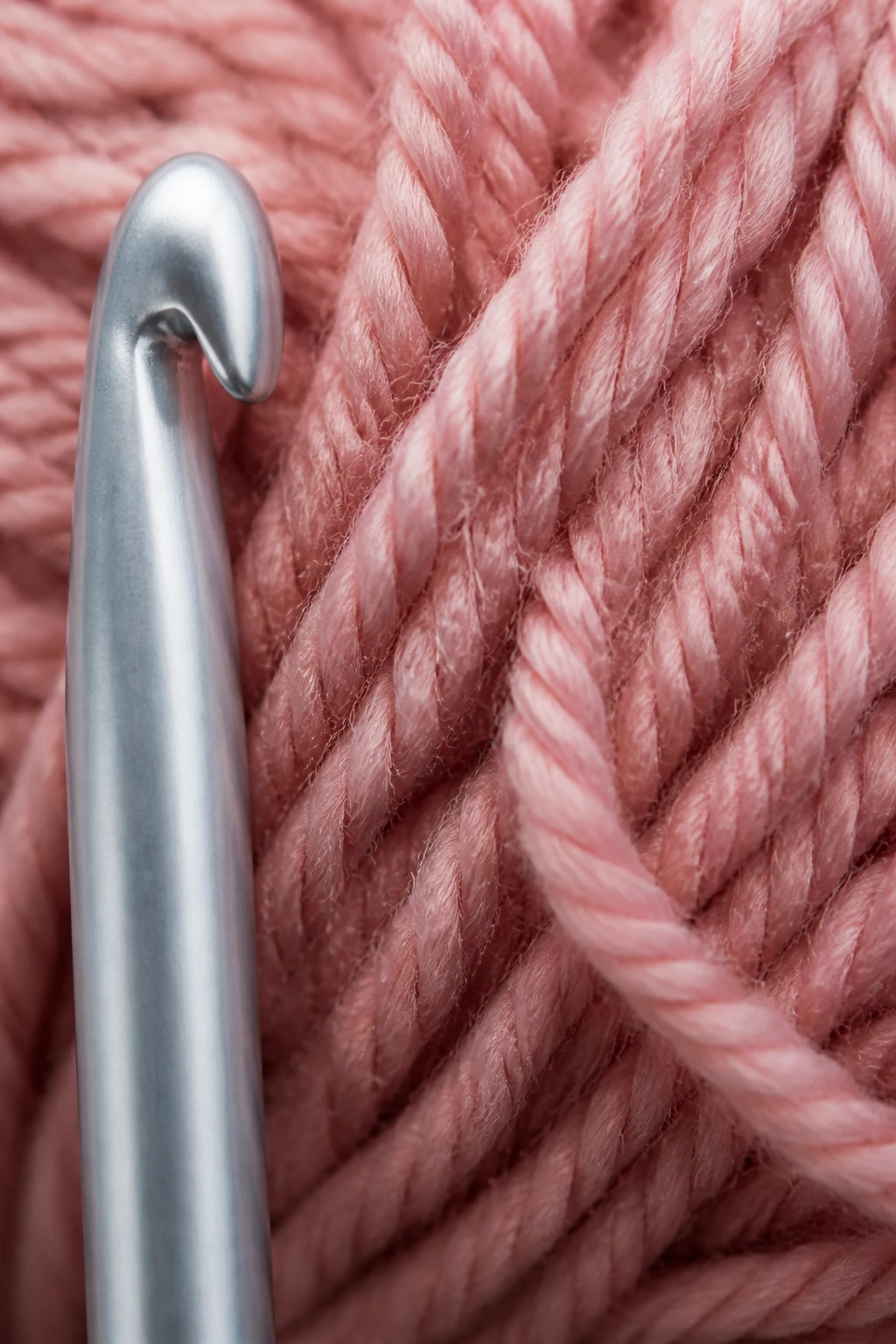
- Aluminum hooks are the happy medium—lightweight, affordable, and versatile.
Special cases: fiber content matters
– Cotton loves a slightly larger hook for drape; otherwise, it can feel stiff.
– Wool sometimes shrinks the fabric a touch, so you might size down or up depending on the project.
– Acrylic is forgiving; you can experiment a bit without panic.
What If You’re Between Sizes?
Patterns rarely offer a perfect world. Here’s how to handle the, uh, gray area.
– Start with the recommended size, but swatch. If your gauge is off by more than 10%, go up or down a hook size.
– If your fabric is too stiff and you crave drape, try a smaller hook for tighter stitches. Wait—drama? No. It’s science: looser fabric needs bigger hooks.
– If your fabric is too loose, switch to a smaller hook. It tightens things up and helps the fabric keep its shape.
When the label lies or is vague
– Some brands don’t give precise gauges. In that case, your swatch is your best friend. Ignore the label’s vibe and trust your gauge.
– If you’re mixing yarns in one project, swatch everything together. The worst outcome is calling it a “garden of texture” and ending up with a mis-sized blanket.
Project Tips: Getting Real with Hook Sizes

Time for some practical, non-dramatic guidance you can actually use.
- Always check the pattern’s gauge; don’t wing it. Your future self will thank you when the shawl fits around your shoulders properly.
- Test your hook before you commit. A quick chain and a few stitches reveal a lot.
- Don’t be afraid to adjust. It’s not cheating; it’s tuning your instrument.
- Keep a small hook-size notebook. Note what worked for which yarn. It’s basically your cheat sheet for future projects.
Specialty Hooks: When to Reach for the Odd Ones
Sometimes you’ll see hooks that aren’t your everyday aluminum wand. Here’s when they shine.
Ergonomic handles
– They reduce hand fatigue during long sessions.
– Great for beginners who aren’t quite sure how to handle stiffness.
Hooks with hooks-to-go
– Travel sets are tiny miracles for on-the-go makers.
– They save you from the “I forgot my hook at home” disaster.
Fiber-friendly materials
– Bamboo or wood can add warmth to your fabric and give you a different texture.
– Steel hooks are excellent for tight crochet or fine threads where precision is everything.
Common Mistakes to Avoid (So You Don’t Do That Again)
We all do dumb things sometimes. Here are the ones that trip people up most often.
– Ignoring the gauge and hoping for the best. Spoiler: it rarely works.
– Picking a hook by color or vibe alone. Size matters. Color? Optional.
– Assuming all yarns of the same weight behave identically. Different fibers act different in the same hook.
– Forgetting to adjust when switching yarns mid-project. Your gauge will tell you when you messed up.
Quick troubleshooting checklist
– Does a 4-inch swatch match the pattern gauge? If no, adjust.
– Is your fabric too stiff or too loose? Size change + a minor tension tweak can fix it.
– Are you using the recommended hook type for the yarn? If not, try a more appropriate one.
FAQ
What is the most common hook size I should start with?
A: For a lot of patterns, a US size G (4.0 mm) or H (5.0 mm) is a good starting point. It covers many worsted weight and DK yarns. But always swatch and follow the pattern’s gauge if it’s a thing you actually want to meet.
How does gauge affect project size?
A: Gauge is basically how many stitches you get in 4 inches. If your gauge is looser than the pattern, your project grows. If it’s tighter, it shrinks. Swatching solves this mystery before you commit to the whole project.
Can I use any hook for any yarn?
A: Not exactly. Lighter yarns usually love smaller hooks for better stitch definition, while heavier yarns want bigger hooks for drape and ease. It’s a yin-yang situation. Start with the label’s suggestion and swatch to confirm.
What if I’m crocheting a delicate lace with bulky yarn? Help!
A: Don’t do that—sarcasm aside, choose a yarn that’s designed for lace weight and pair it with the recommended hook. If you’re stubbornly pairing bulky yarn with a lace hook, the stitches will complain, and so will your finished piece.
How do I know when to switch hooks mid-project?
A: If your swatch looks right but your fabric is pulling or bunching, consider a minor hook-size tweak. The change doesn’t have to be dramatic—one size up or down can fix the whole thing.
Conclusion
So there you have it: hook sizes explained simply, with a dash of humor and a lot of practical wisdom. The goal isn’t perfection on the first try; the goal is to understand how a hook and a yarn vibe together to create something you’re proud to show off. Gauge, swatches, and a bit of experimentation are your best friends here.
If you’re ever uncertain, remember this: you’re not cheating the system by adjusting hook size to fit your yarn. You’re tuning your instrument so your fabric sings. IMO, the world needs more yarn that actually lays flat and more crocheters who know their tools. So go ahead, pick a size, swatch like a champ, and craft something you’ll wear or gift with a grin.