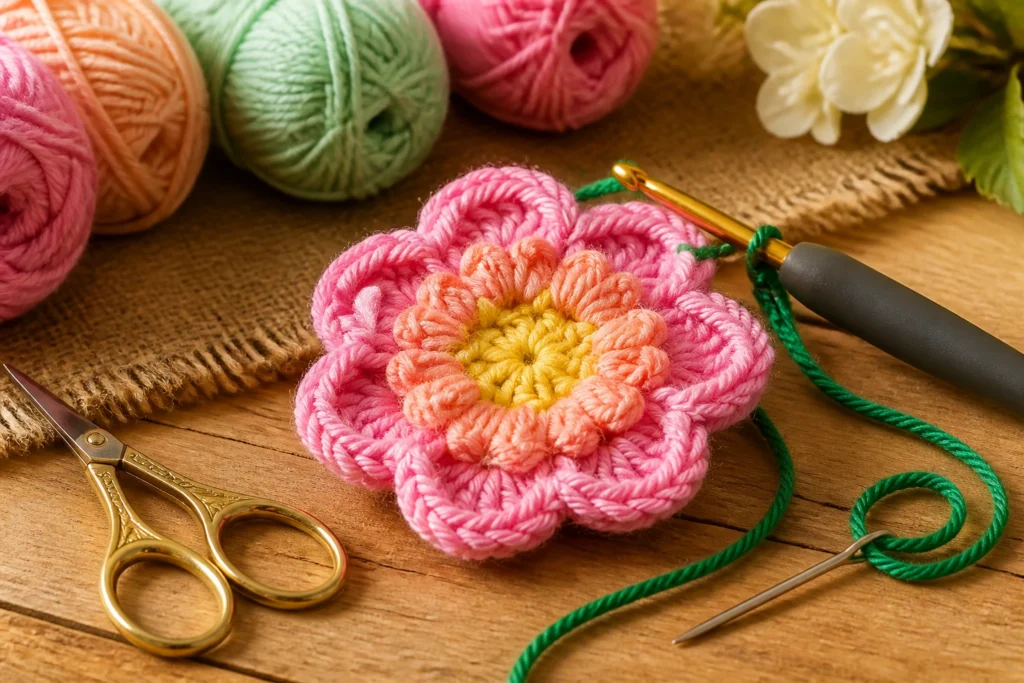
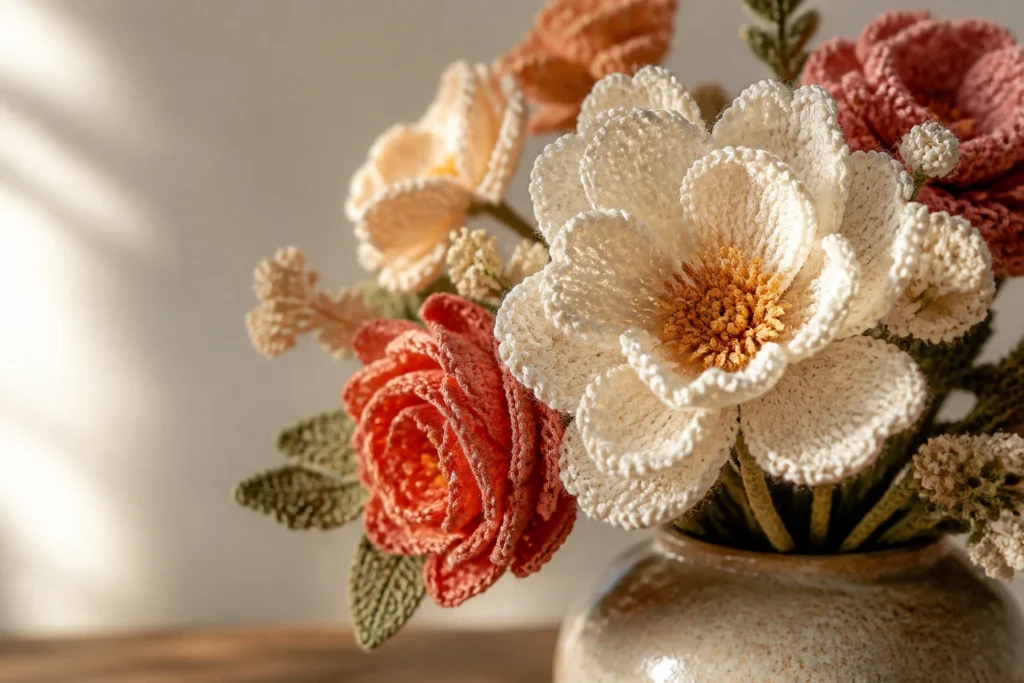
If you’ve ever crocheted a delicate bouquet and watched petals droop faster than your ratio of coffee to sleep, you know the magic of stiffening just right. There’s nothing worse than a bloom that can’t hold its own shape. Let’s fix that—without turning your precious flowers into cardboard. FYI, the goal is stiffness that keeps petals natural-looking and flexible enough to handle.
What stiffening actually does for crochet flowers
When you crochet flowers, your stitches are typically looser than the crisp lines of a machine-made bloom. Stiffening adds a touch of structure so the petals don’t sag, the centers stay defined, and your bouquet keeps its pose about as long as you want it to. It’s not about turning them rock-hard; it’s about giving them a little backbone so they can stand up to display, storage, or a killer photo.
– It preserves shape through handling, drying, and time.
– It helps petals hold angles, crescents, and rolled tips.
– It can be tailored for different textures, from papery to silk-soft.
So, how do you achieve that perfect stiffness without wrecking your stitches? Let’s explore the main methods and when to use them.
Method 1: DIY starch and water mix
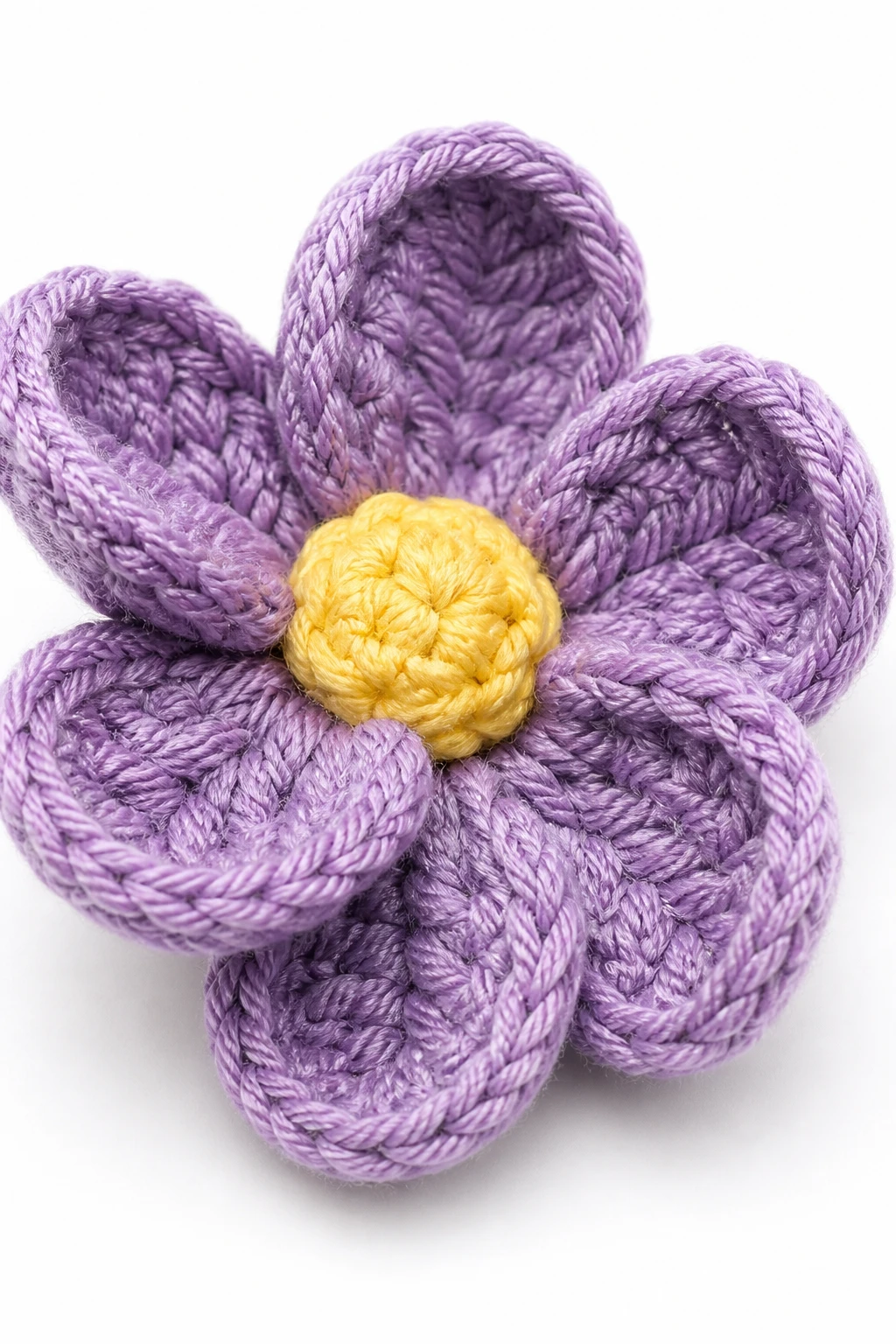
This is the classic, no-fuss option. A simple starch solution gives a crisp, holder-of-shape finish that’s also easy to re-wet if you want to reshape later.
What you’ll need
- Clear starch or laundry starch
- Warm water
- Small bowl
- Soft cloth or sponge
- Pins and a foam block or cardboard for shaping
Steps
- Mix about 1 tablespoon of starch with 1 cup of warm water. Stir until smooth. FYI, you can adjust for stiffer or lighter results by adding more starch a teaspoon at a time.
- Dip or brush the petals and leaves. Don’t soak—excess liquid adds weight and drag.
- Shape immediately with your hands or pins on a foam block. Hold until the starch sets a bit.
- Let dry completely in the desired pose. If you want a crisper finish, give it a second light mist and a final dry.
Pros
- Low-tech and cheap
- Good control over stiffness with gradual adjustments
Cons
- Can leave a slight sheen or white residue if over-applied
- Not ideal for very delicate or drapey crochet threads
Method 2: Fabric stiffeners and clear-drying finishes
If you want precision without the risk of starch residue, a spray-on or brush-on fabric stiffener can be your best friend. These products come in various sheens and stiffness levels, so you can tailor to your project.
What you’ll need
- Fabric stiffener or clear spray-on finish
- Masking tape or pins
- Protective surface or old sheet to catch overspray
- Optional: satin clear sealer for a gentle shine
Steps
- Lay out your petals on a flat surface. Position them as you’d like them to dry.
- Lightly mist or brush a thin layer. Avoid soaking; you want a dry finish, not a pool of goop.
- Support shapes with pins or gentle bends. Let dry completely before handling.
- Finish with a light sealant if you want extra protection and a uniform sheen.
When to choose fabric stiffeners
If you’re after a clean, museum-like pose with minimal odor and predictable results, go this route. It’s especially nice for wired or heavily layered petals that need edge definition.
Method 3: Wire insertion for long-lasting pose
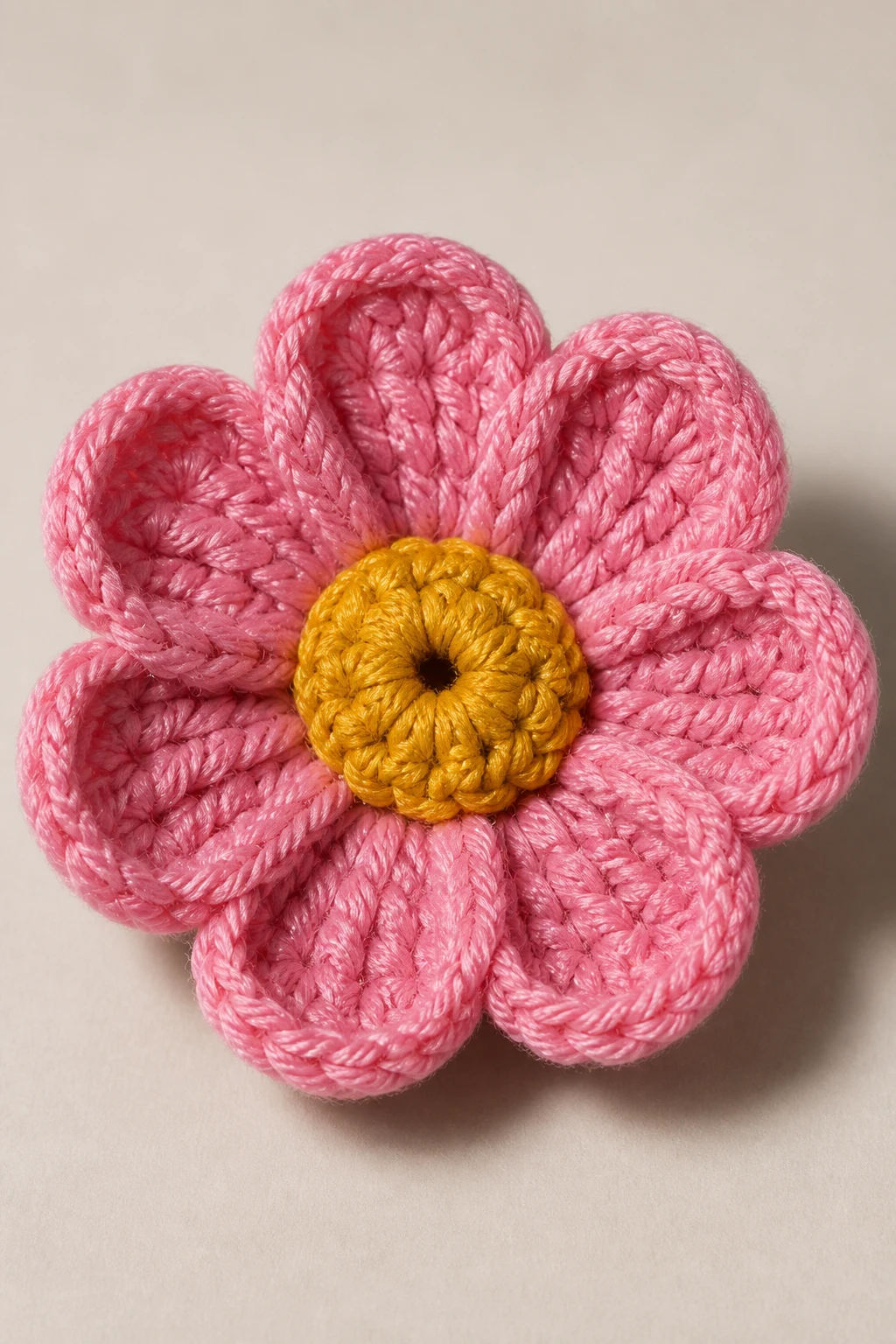
Sometimes a stiffening method isn’t enough—especially for larger flowers or bouquets that need to stay upright in a vase. Adding a small wire backbone gives you control over angle and life span.
What you’ll need
- Florist wire (thin gauge works best)
- Needle-nose pliers
- Floral tape or green tape
- Clean, dry petals and a soft foam block for shaping
Steps
- Thread a short piece of wire through or along the back of each petal, depending on your pattern. Start at the base and guide toward the tip.
- Shape the wire to the desired angle. Use pliers to crimp gently if you need a tighter bend.
- Wrap the wire with floral tape to conceal and secure. Tape in tight, but don’t crimp the crochet stitches.
- Gently insert into a coordinating block or glue into a foam base. Let any stiffener you used dry before display.
Note on wiring safety
Be mindful of sharp ends. Clip excess wire and cover tips with a dab of glue or a small bead to avoid poking fingers when handling.
Method 4: Chocolate-box chic—trickier, but gorgeous
Okay, this one sounds wild, but it works in a pinch: using a light mix of white glue and water, then a light varnish. It creates a durable, almost plucky-drying finish that holds shapes without becoming brittle.
What you’ll need
- White craft glue (PVA)
- Water
- Soft brush
- Sealant or spray varnish for finish
Steps
- Mix one part glue to one part water for a gentle consistency. Adjust with more water if petals feel heavy.
- Brush onto petals, shaping them as you go. Less is more here to avoid stiffness turning cardboard-y.
- Let dry completely, then apply a light varnish to seal. Done and dusted.
Why this might suit you
This method is handy if you’re layering multiple small blooms and want a consistent matte finish with a bit of bounce.
Getting the look you want: texture and finish tips
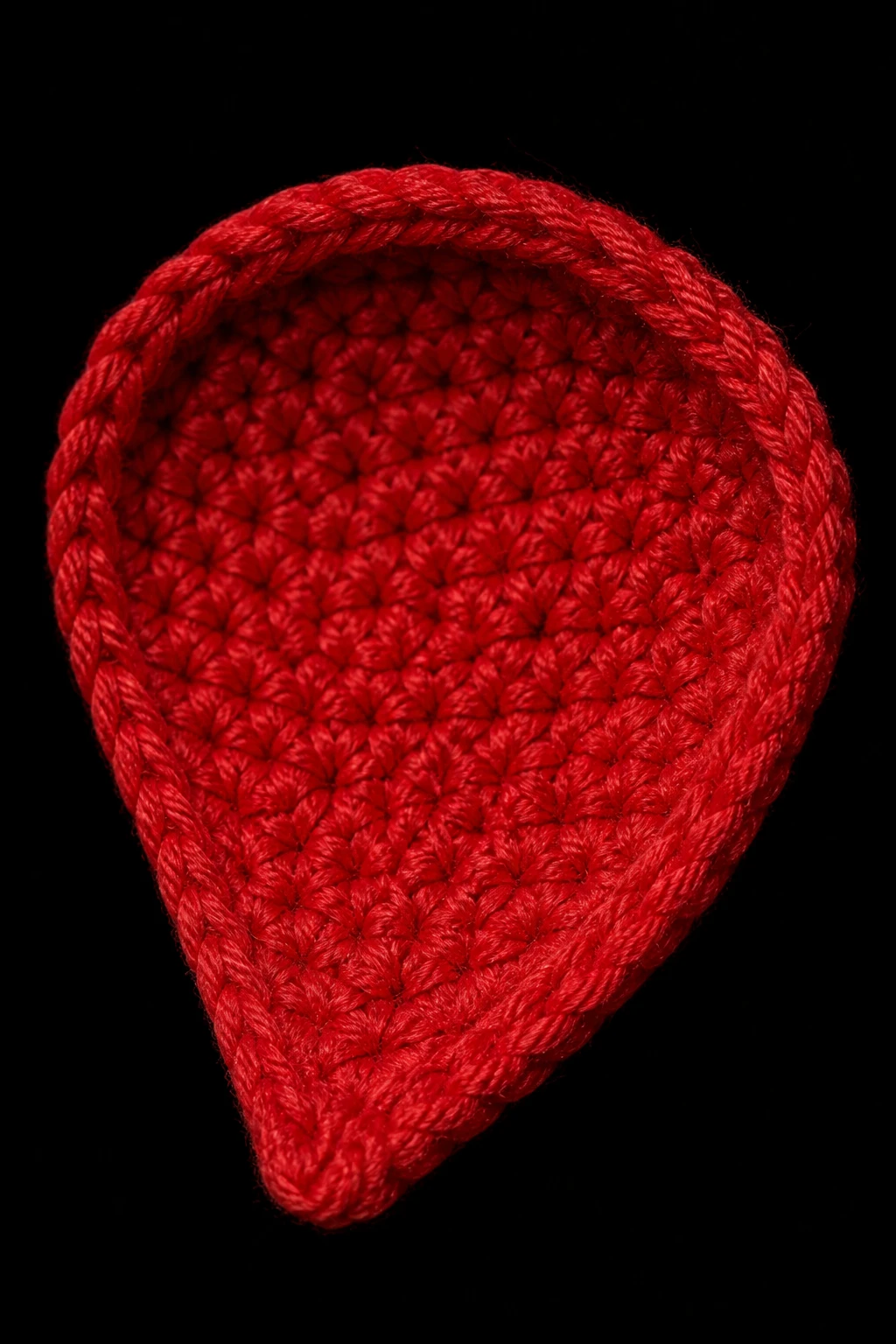
Stiffening isn’t just about a hard shell. You can tune texture and finish to keep your crochet flowers looking natural and alive.
Tips for texture
- Consider a mix of stiffeners on different layers. Petals at the front can be stiffer, while back petals stay a touch softer.
- Use light dabs with a brush to add a tiny vein texture before stiffening for extra realism.
- Experiment with finishing sheens. Semi-matte looks more natural than a high-gloss snap.
Color considerations
- Stiffs can slightly alter color; test on a scrap petal first.
- Clear products preserve color best, but a tinted stiffener can add depth—just test first.
Practical testing: how to know you’re done
Let’s be honest: you’ll want to know when your flower is truly ready to shine.
– Touch-test: gently press a petal. It should maintain its shape without cracking.
– Dry-time: most methods require 3–24 hours. Rushing is a bad idea; patience pays here.
– Stiffness level: aim for petals that hold their curve and angle but still look soft and lifelike.
– Assembly sanity: fit your stiffened pieces into a bouquet or display before finalizing. If they flop, you’ll know what to tweak.
Common mistakes to avoid (and how to fix them)
We all mess up sometimes. Here are the ones I see most and how to salvage.
Over-wetting
– Symptom: petals feel soggy and saggy after drying.
– Fix: try a lighter application next time or a shorter soaking time. Let them dry fully before handling.
Too stiff, not flexible
– Symptom: petals crack or don’t hold natural folds.
– Fix: switch to a milder stiffener or mix more water into the solution. You want a gentle set, not a rock.
Sticky residue
– Symptom: sticky film on hands or surfaces.
– Fix: wipe with a clean damp cloth and allow to finish drying in a ventilated area. For fabric stiffeners, a light spray of a finish or a dab of alcohol can help.
Maintenance: how to care for stiff crochet flowers
Once you’ve got them how you want, keep them looking fabulous.
– Dust regularly with a soft brush or microfiber cloth. FYI, a quick blast with a hairdryer on cool can dislodge stubborn dust.
– Store in a dry, cool place away from direct sunlight to prevent yellowing or brittleness.
– If a bloom softens over time, re-stiffen with a light second pass. No drama, just patience.
The FAQ: quick answers for common questions
Can I stiffen without changing the color of my yarn?
Yes, most solvents and stiffeners are clear, but some may impart a slight tint or sheen. Test on a scrap swatch first and choose products labeled as clear or color-safe.
How dry is dry enough before handling?
Give it at least several hours to overnight, depending on the product. A good rule: if it still feels tacky, it isn’t done. Dry, not chalky.
Will stiffening damage delicate crochet stitches?
If you apply product evenly and avoid soaking, you should be fine. The biggest risk is heavy application causing stitches to gape or stiffen too much. Go light, test, adjust.
Can I re-wet my stiffened flowers if I want to reshape?
Some finishes allow re-wetting, especially water-based stiffeners. Do a small test patch first; you might need to re-set with another light stiffening.
Is there a best method for beginners?
Starch or a light fabric stiffener is friendly for beginners. It’s forgiving, cheap, and easy to adjust. As you gain confidence, you can experiment with wire, sealants, and layered textures.
Conclusion
Stiffening crochet flowers is less about battlefield-level precision and more about giving your blooms a confident pose. Play with different methods, mix and match for texture, and don’t be afraid to rewrite your technique as you go. IMO, the joy is in the experimentation—finding that perfect balance between stiffness and softness that makes your bouquet feel alive. So grab some scraps, a cup of tea, and start testing. Your crochet garden will thank you with petals that stand tall and proud.