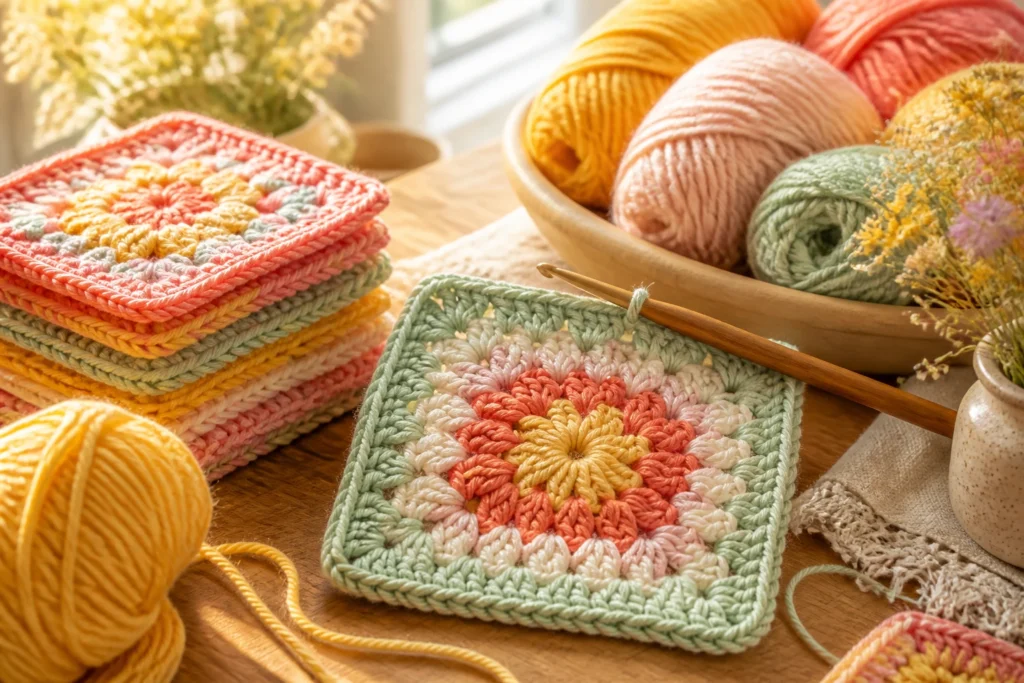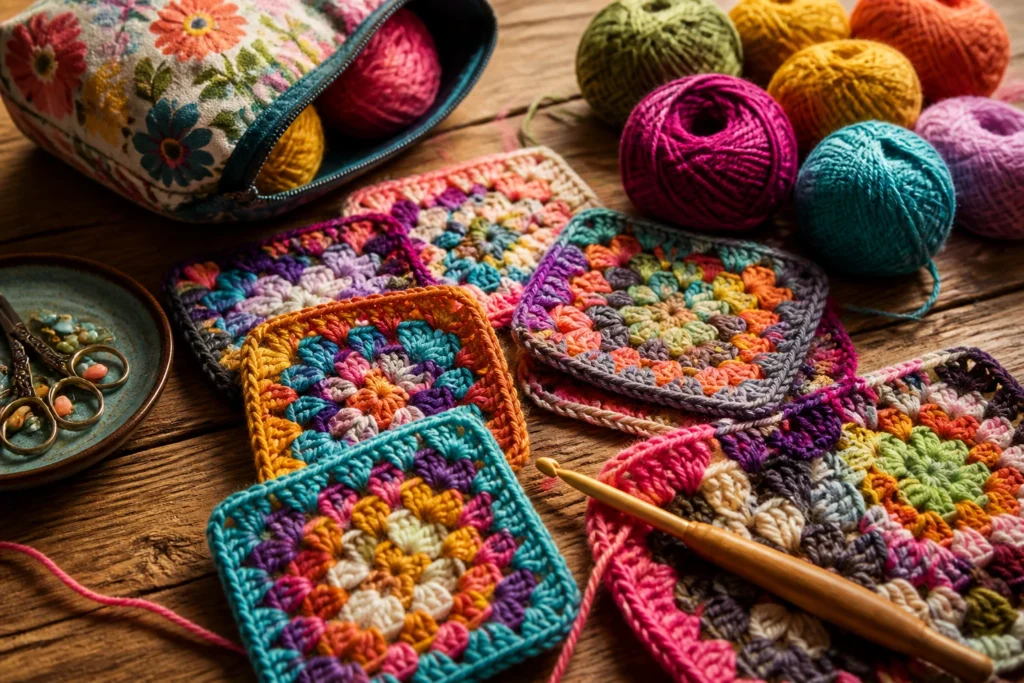
The moment you pick up a hook and a skein, you can feel it: Granny squares aren’t just different shapes, they’re different attitudes. Solid granny squares behave like little fabric powerhouses, while traditional granny squares carry a legacy of color and texture. Which one should you pick for your next project? Let’s dish.
What makes a solid granny square tick?
Solid granny squares are all about clean geometry and compact stitches. They feel sturdy, with crisp edges and a chorus of uniform stitches. If you want a piece that holds its shape without a lot of fuss, solid squares are your friends.
– They’re usually worked in rounds or rounds-within-rounds that emphasize a tight, even fabric.
– The colorwork tends to stay true and even because you aren’t chasing a lot of gaps or decorative stitches.
– Finishing tends to be quicker because there’s less texture to smooth out when you seam.
If you’re after a modern, graphic look—think blankets with bold blocks, home decor that stays put on a chilly evening—solid squares shine. They’re also forgiving for beginners who want a reliable, repeatable pattern without surprises.
What makes a traditional granny square tick?

Traditional granny squares are all about charm, texture, and a hint of nostalgia. They’re the cozy cardigan you wear on a rainy day: familiar, comforting, and a little more forgiving of color experiments.
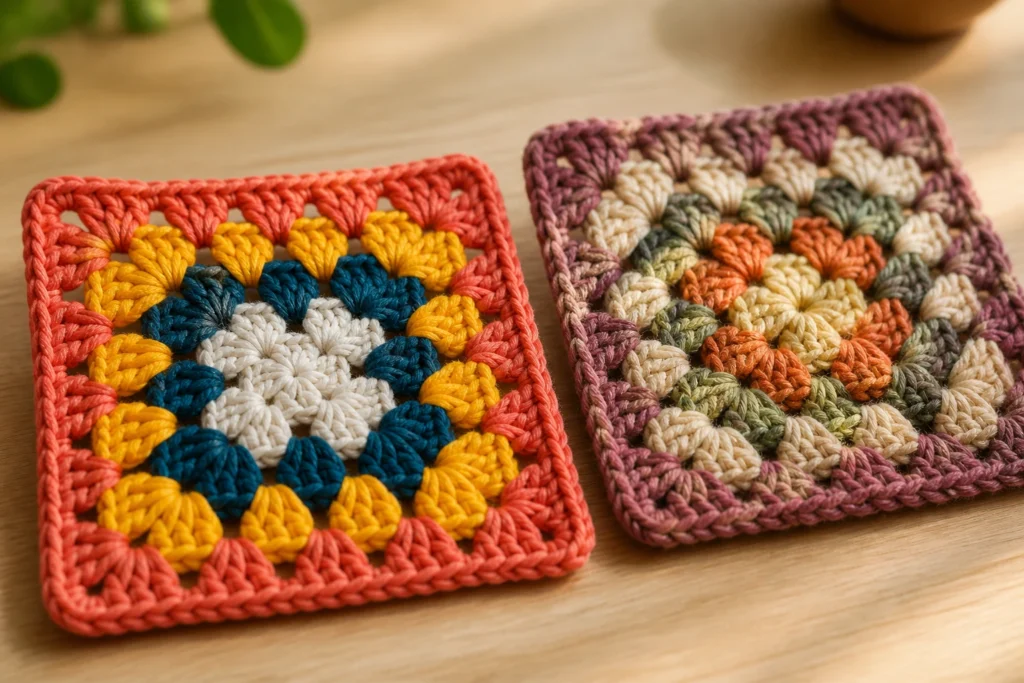
– They usually feature clusters of stitches (often in sets of three) that create those classic “petals” or rings.
– Edges tend to be a touch more rounded, giving the square a softer look.
– Colorwork often embraces variegated yarns and multi-color palettes, with lots of opportunities for playful transitions.
Crucially, traditional squares invite storytelling through color. You can weave in memories of a grandmother’s stash or a favorite thrift-store yarn. FYI: the charm isn’t just cosmetic—those extra stitches can feel more forgiving if you’re still chasing perfect tension.
Texture, weight, and drape: how they stack up
Texture and weight can make or break a project, depending on what you’re making.
– Solid squares tend to be denser. They give you a finished piece with more structure.
– Traditional squares can be lighter and airier, especially if you’re using bigger hook sizes or lighter yarns.
Drape matters for blankets versus wall hangings. If you want a throw that folds over a couch without losing shape, solid squares are great. For a throw that drapes softly over a chair or bed, traditional squares with a looser stitch might be the ticket.
– Want a sturdy baby blanket? Go solid.
– Want a cozy throw that feels like a warm hug? Consider traditional with a looser or lighter-weight yarn.
Color play: bold blocks or cozy gradients?
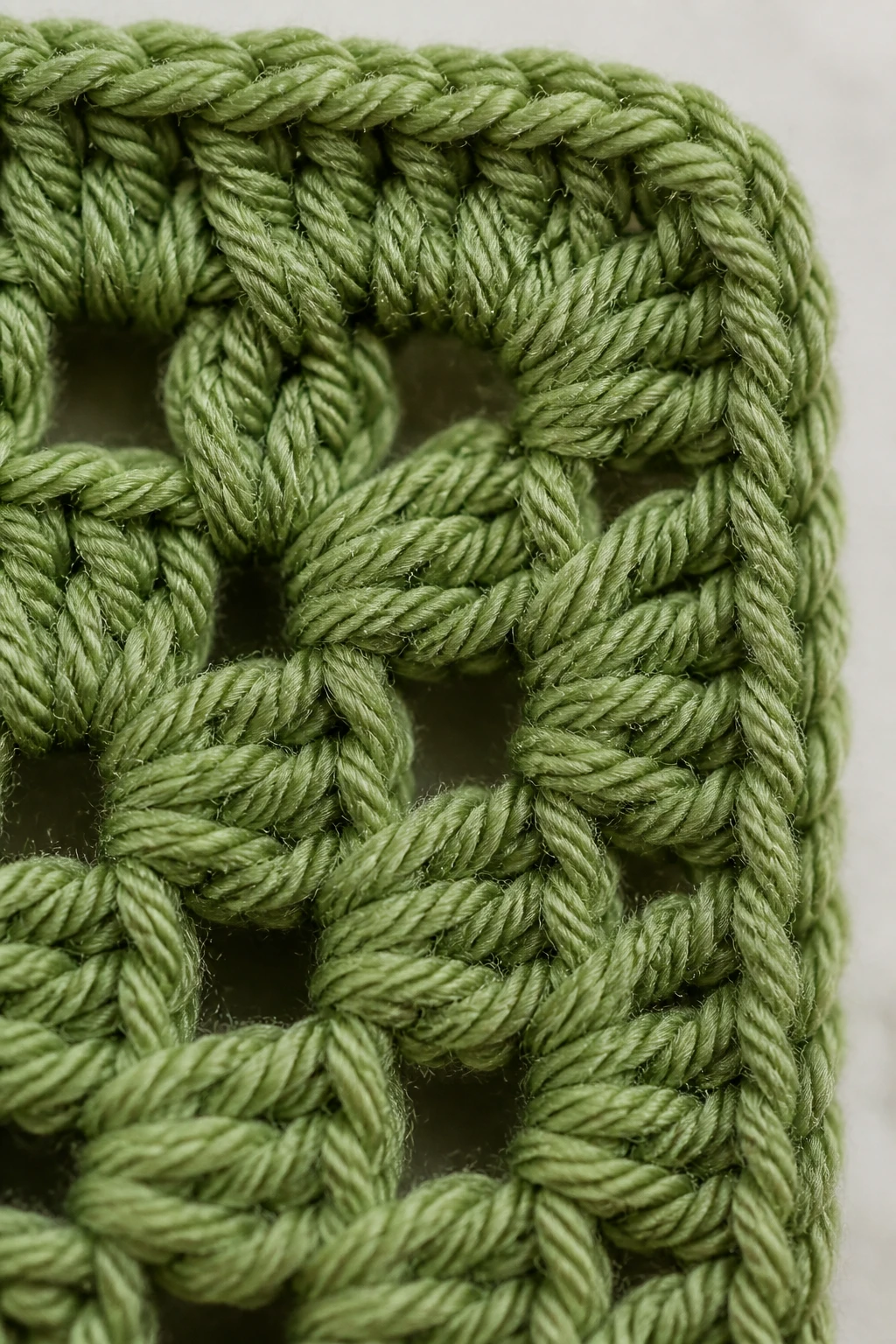
Color is where the fun gets loud. Solid and traditional squares both love color, but they use it differently.
– Solid squares are ideal for bold, graphic color blocking. Picture a checkerboard or a high-contrast stripe fantasy.
– Traditional squares shine with color gradients and multiple hues per square. The clusters can act as tiny color courts, drawing your eye along a winding path.
If you’re itching to experiment, here are a couple of routes:
– Try a color-wheel approach with solid squares for each quadrant of a blanket.
– Or go wild with a multi-yarn palette in traditional squares to create a quilt-like mosaic.
Two quick tips:
– Keep a color count in mind. Solid blocks benefit from even color distribution across the project.
– If you’re using variegated yarn, traditional squares can let the color changes sing, while solid squares keep those color shifts more contained.
Seaming and assembly: does one type win?
Yes—and no. The way you join squares can change the whole vibe of the finished piece.
– Solid squares: seams tend to be visible because the edges are crisp. You might prefer a simple whip stitch or a mattress stitch to keep things neat and nearly invisible.
– Traditional squares: the texture around the edges can disguise joins a little more. You can play with whip stitches or slip-stitch joins to subtly blend.
The practical bit: plan your layout before you start joining. With solid squares, you might want a rigid grid. With traditional squares, you can be more forgiving with offset layouts that feel cozy and organic.
Pattern ideas: practical projects that showcase each vibe

Here are a few project ideas that let the character of each square shine.
– Solid square projects
– Monochrome throw with bold borders
– Geometric baby blanket with heavy color blocking
– Wall hanging that doubles as modern art
– Traditional square projects
– Rainbow granny blanket that feels like a quilt
– Cozy shawl or lap blanket with gradient yarns
– Patchwork-style bedspread using a wide color palette
If you’re torn, try a hybrid approach: mix solid and traditional squares in a single project to balance structure with charm. FYI, it’s totally acceptable to mix and match unless your inner perfectionist screams in all-caps.
Common mistakes to avoid (and how to fix them fast)
Even seasoned crafters trip up now and then. Here are the tiny, fixable things that tend to trip people up with granny squares.
– Uneven tension across rounds
– Fix: insert slightly more or fewer stitches in the problematic rounds and weave in ends predictably as you go.
– Edges curling inward or outward
– Fix: check your hook size and stitch count per round; a slightly larger hook or a couple of extra stitches can flatten the edge.
– Color tangles or pooling in ways you don’t want
– Fix: switch to a more consistent color order, or swap to a solid color to balance eyebrow-raising pooling.
– Joining becomes a bulky seam
– Fix: switch upJoin methods, like using a slip stitch join on the inside and a mattress stitch on the outside for a cleaner look.
H3: A deeper dive into tension and gauge
Tension is the silent party crasher. It can wreck your plans or save the day, depending on how you handle it.
– How to measure gauge without turning your project into a math problem
– Crochet a small square, say 4 inches, and count the stitches. Compare to the pattern’s gauge.
– If you’re off, switch hook sizes and test again until you match.
– Balancing density with warmth
– Denser fabric = more warmth, less stretch.
– Lighter density = softer drape, more airiness.
– Quick tricks to even out tension
– Maintain a relaxed grip.
– Practice consistent yarn feeding—don’t yank, don’t drown the hook in yarn.
H2: Maintenance and care tips for longevity
What good is a masterpiece if it felts in the wash, right?
– Solid squares
– Typically hold up well to washing on gentle cycles.
– A touch of starch in the first wash can help keep edges crisp (optional and depends on yarn).
– Traditional squares
– Good news: they often hide a little more texture, which means less visible wear at joins.
– Consider hand washing or cool, gentle cycles for delicate yarns.
– General tips
– Block aggressively when necessary. It can realign stitches and brighten colors.
– Store flat or rolled to avoid stretched corners.
H2: The big decision: which should you pick?
If you’re torn between solid and traditional, here’s a simple thought: what feeling do you want your finished piece to give?
– Go solid if you crave structure, bold geometry, and modern vibes.
– Go traditional if you want nostalgia, texture, and cozy complexity.
But hey, you don’t have to pick one. A mixed project can give you the best of both worlds: crisp blocks alongside soft, rounded patches. IMO, that combo is where the magic hides.
FAQ
Can I mix solid and traditional granny squares in the same project?
Yes. Mixing creates a dynamic, patchwork look that’s both modern and retro. Plan your layout first so the transitions feel intentional rather than accidental. FYI, it’s easier to manage if you decide which squares will be solid and which will be traditional before you start stitching.
Which yarn weight is best for beginners?
Worst-kept secret: worsted weight (medium #4) is your best friend for learning. It shows stitches clearly, grows quickly, and you won’t overthink it. You can graduate to DK or chunky once you’re comfortable.
What hook size should I use for solid vs traditional squares?
Typically, use a hook size that matches your yarn label recommendations. If you’re chasing a denser solid square, go a slightly smaller hook. For a looser traditional square, a larger hook can help. Always swatch first so you’re not surprised by the final density.
How do I join squares without bulky seams?
Try a mattress stitch or a subtle slip-stitch join on the inside. For a cleaner exterior, consider a crochet seam that hugs the edges. Blocking afterward can help blend seams so they look intentional rather than chunky.
Do I need blocking for granny squares?
Blocking isn’t mandatory, but it’s often worth it. It evens tension, straightens edges, and can drastically improve the overall finish, especially for solid squares that benefit from crisp lines.
Are granny squares still trendy in 2026?
Yep, and they’re showing up in fresh, updated forms. People mix traditional techniques with bold color blocking, as well as experiments with gradient yarns and lightweight fabrics. If you love crochet, you’re in the right neighborhood.
Conclusion
Solid or traditional granny squares, the heart of the matter is how you want your project to feel. Do you crave modern structure with punchy blocks, or do you want the warm fuzziness of classic textures? Either way, you’re covered. Start with a small swatch, experiment with color, and let your inner critic take a hike—this is about joy as much as technique.
If you’re feeling ambitious, try a two-rail project: a solid-centered blanket with traditional corner motifs for a splash of whimsy. It’s a cheeky nod to both schools of granny square thinking, and it looks absolutely intentional when you’re done.
FYI, the crochet community loves a good experiment. So grab a hook, pick a yarn, and have fun. After all, the square is just a tiny canvas you carry around in your lap. Now go stitch like you mean it.